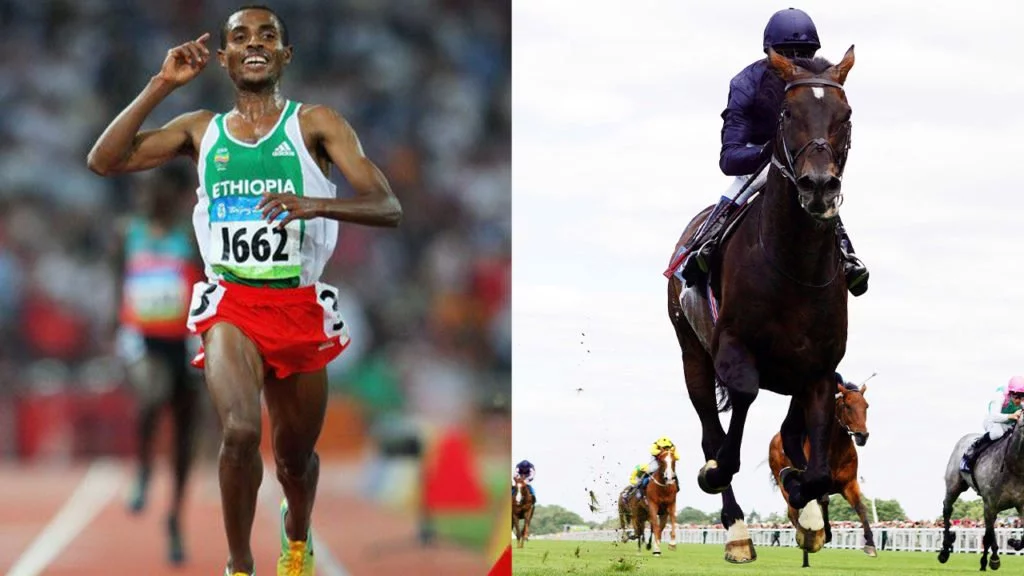
The Tokyo Olympics has served up some wonderful sport over the last couple of weeks.
There have been some tremendous performances from athletes hailing from all corners of the globe, but who would be the gold medal winners if British racing held its own Olympic games?
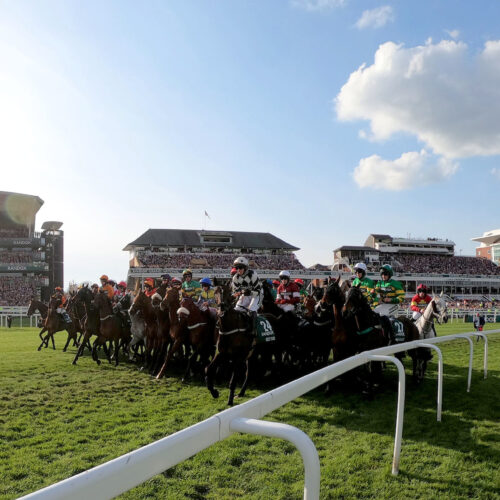
Here’s the comparison between the different types of Flat racehorses versus their Olympic counterparts.
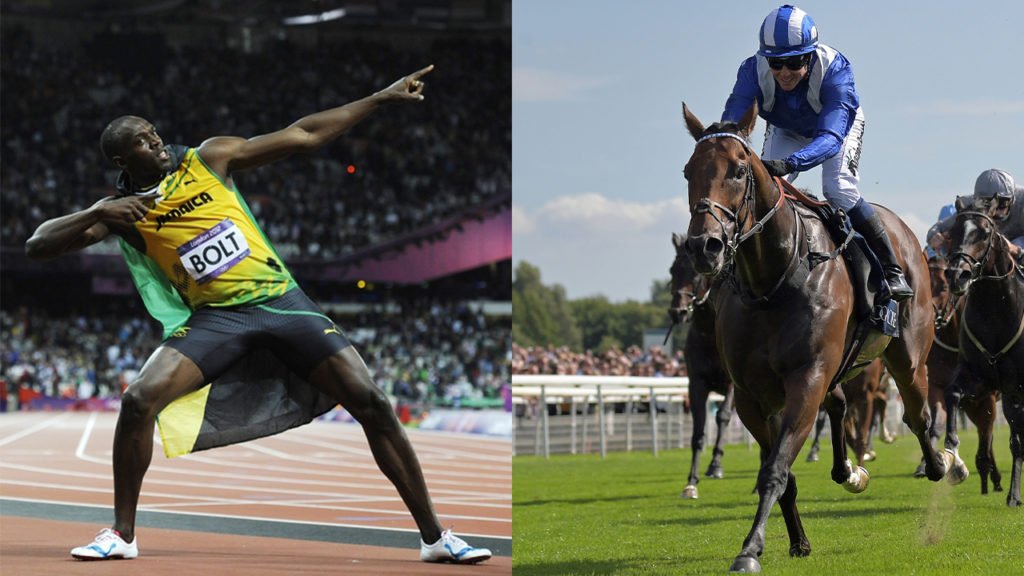
These are the sprinters – the quickest of the quick. There are eight furlongs to a mile with each furlong measuring just over 200 metres. That makes the five‐furlong races little more than 1,000m.
They are the shortest contests in horse racing and equate to the 100m sprints, some might argue the pinnacle of the Olympic track events.
Athletes likes Dina Asher Smith, one of the stars of Team GB but hampered by injury this year, and Jamaican great Usain Bolt are matched in the racing world by Battaash. He was retired last week after winning every top five‐furlong prize in Europe at least once, including Royal Ascot’s King’s Stand Stakes and the Nunthorpe Stakes at York twice.
Oxted won this season’s King’s Stand having last year won the season’s most prestigious six‐furlong race, the July Cup at Newmarket. It’s comparable to an athlete winning Olympic Gold in the 100m and 200m.
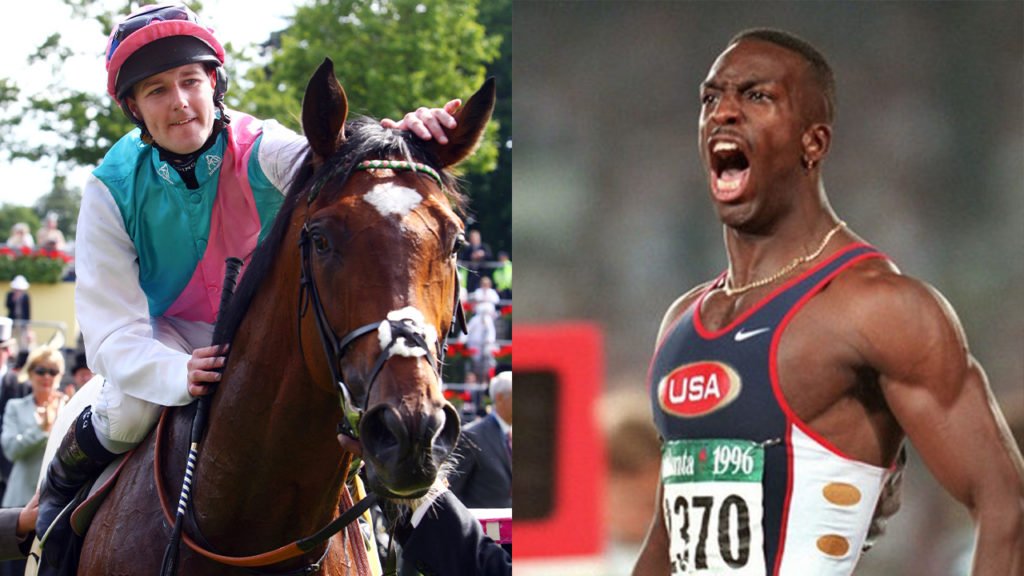
These mile races are the equivalent of the 400m for track athletes: a long hard test of speed and stamina.
One lap of the Olympic Stadium is like those mile horse races, often run on a straight, including the Queen Anne at Royal Ascot or Newbury’s Lockinge Stakes. They’re both Group 1 contests, the term used for the best races.
Perhaps, the greatest racehorse of them all, Frankel, did most of his racing over a mile. He retired to stud having won all of his 14 races including two victories on QIPCO British Champions Day.
The top milers are the equivalent of the likes of Bahamian stars Steven Gardiner and Shaunae Miller‐Uibo, as well as UK record holder Iwan Thomas.
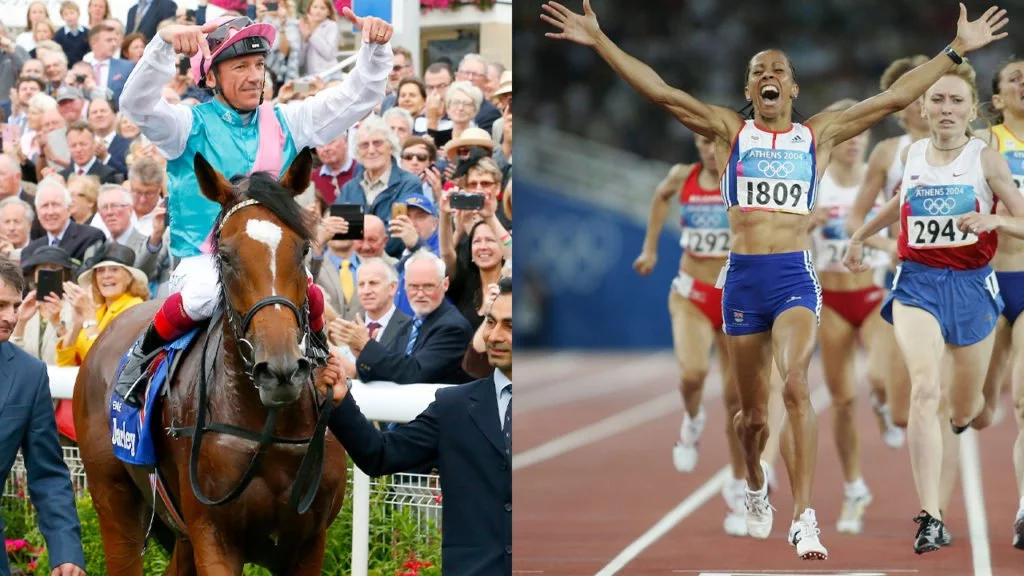
These are the middle distance races. Some of horse racing’s most famous races are run over this distance, including the Derby. Shergar, Galileo, Sea The Stars and Golden Horn are some of the great winners of the Derby, run at Epsom on the first Saturday in June.
This season Adayar joined the roll of honour before following up in another of the summer’s top mile‐and‐a‐half races, the King George VI and Queen Elizabeth Stakes at Ascot.
Enable won the Oaks, the equivalent of the Derby for fillies and run a day earlier, before dominating the middle‐distance races. She won a record three King Georges, as well as France’s top prize, the Arc de Triomphe, before retiring at the end of last season.
On the athletics track, the equivalent races of the Derby and Oaks are often won by Kenyan runners likes reigning 1,500m Olympic Champion Faith Kipyegon and World Champion Timothy Cheruuiyot.
For those with longer memories, Seb Coe, Steve Ovett and Steve Cram dominated in a golden era for British middle‐distance running during the 1980s and more recently Kelly Holmes winning the 2004 Olympic Gold in the 1,500m.
These are the longest races. The best of these marathon contests are known as ‘cup’ races. The Gold Cup, run over two‐and‐a‐half miles at Royal Ascot, is the pinnacle for the stayers.
There’s also the Yorkshire Cup, the Goodwood Cup, the Doncaster Cup and the British Champions Series Long Distance Cup. Stradivarius has dominated this division in recent years although his attempt to win a record‐equaling fourth Gold Cup fell short in June.
Not even he can boast the staying power of his Olympic counterparts. The Gold Cup is run over 4,000m but Mo Farah won Olympic Gold medals over 5,000m and 10,000m, completing the incredible feat at both the London games in 2012 and at Rio de Janeiro four years later.
Stayers are often some of the most popular racehorses as they usually return year after year while some of the stars of shorter distances are more in demand for stud duties.
Yeats holds the record of four Gold Cup wins, while Persian Punch and Double Trigger were among those to attract a cult following among racing fans
The festive period is packed full of top-class jumping action. The Ladbrokes King George VI Chase is the glittering highlight as the focus falls on Kempton’s annual Boxing Day card. It starts...
The new generation of jockeys and trainers feature prominently in the enthralling second series currently captivating viewers. The six-part documentary follows jump racing’s biggest stars throughout last season. They include teenage rider...
The six-part series goes behind the scenes to give viewers a fascinating insight into the exciting world of jumps racing. The ITV cameras were allowed a rare peak into the inner sanctum...